domingo, 2 de diciembre de 2018

Educational Project Museum: MACBA

Hi, artists!

In order to find out how museums bring art to students from Primary Education, we decided to contact MACBA as we found out in the webpage that they have a lot of educational projects. I was one of the members of the group that was lucky enough to go to an exposition and a workshop with a school to see how they did it. Not all of the members of our group went there because they told us that we were a lot of people. So only I and Eugènia Delgado went there.

It was incredible to see how topics so important such as racism, inequality between men and women or war were introduced to the students through the different artistic works. Topics that are so important to work in a democratic society and that can allow us and our students to become citizens engaged with human rights were introduced in a fascinating way. The guide was all the time asking to  the children questions that would allow them to contextualise more the topic developed in that painting or sculpture. For working the topic of feminism, they were asked to tell names of fampu artists. Surprise! Almost all of the ones students knew were men.

Art is about thinking about the inequalities in the world, about opening your mind, about becoming a more democratic citizen as Heike Freire would say. Why do we not do this at school when this is so important? It seems like politicians do not want people to think about these thematics... Is it more important to constantly learn about the grammar, about the numbers... and not about human feelings, fights and ways of expression? Art is a way of reflecting what you are feeling, what you see in the world and what has concerned humanity. That is why it is as important as reading and doing mathematics.

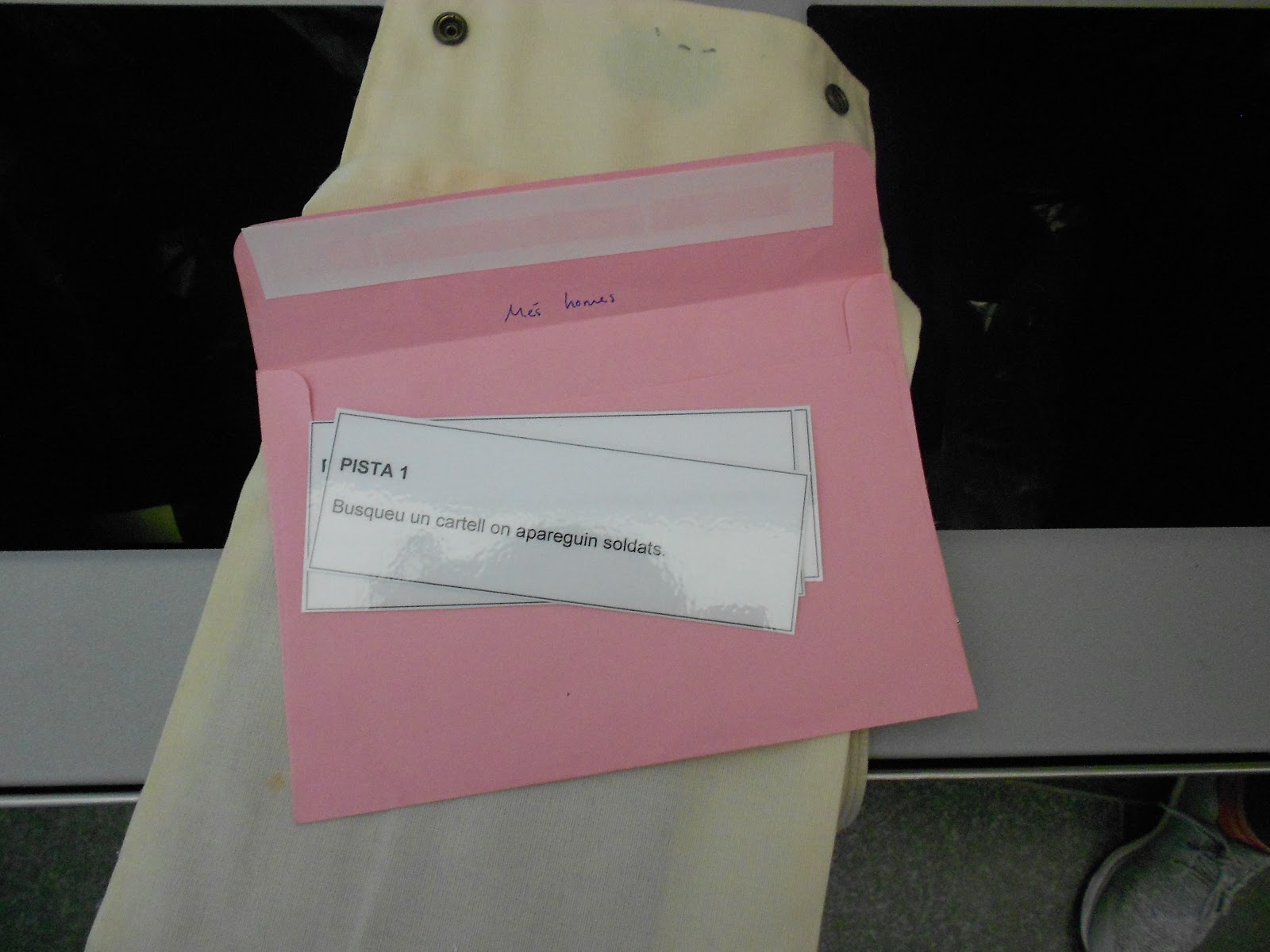
We did a written project and a presentation about this experience. As that would be too long and too complicated to do through here, I will just leave you some photos in order for you to get an idea of what it was like. Think about the different topics I have commented you previously.

Imagen relacionada
Retrieved from: https://www.macba.cat/es/self-portrait-0413

 Eulàlia Grau 'Aspiradora (Etnografia)', 1973
Retrieved from: https://www.macba.cat/en/aspiradora-etnografia-3777Resultado de imagen de guerrilla girls macba  
Retrieved from: https://www.macba.cat/es/expo-coleccion-macba-2018


Imagen relacionada
Retrieved from: https://www.macba.cat/en/projecte-de-monument-per-a-un-jardi-1473


After this, there was the workshop, which consisted in the students doing a poster by using all the knowledge acquired in the exposition.

But if you want to know more about our project, we have done a power point in which there are some images. You can also access to our written project.


martes, 13 de noviembre de 2018

Portrait

We had to do a portrait of one of our class mates.
First of all, we had to do it without watching the paper, only the person. In my case, I was portraiting Eugènia Delgado.


And in this one I did look the paper while I was looking at Eugènia. An aspect I want to highlight is that the teacher said that by looking at the person and doing this we were working our observating skills and our concentration, which is something the schools always look for! Why do we not do more art classes, then? That is a good question, isn't it? Maybe we would be too curious and creative? We should really start thinking why schools only focus in maths and languages and not in the different communicative ways that exist. Isn't painting a way of expressing ourselves as valued as writing? Why not?


To compare these two results is really funny as you really see the difference between drawing and observing the paper and drawing and only observing the person.


lunes, 12 de noviembre de 2018

Hybrid


Hi, artists!

Today I am going to explain you a concept called a "hybrid". I will also give you tips about the process you can follow to create one of your own.

We started the course by creating our own hybrid (to make something new by taking two objects that exist). In order to do so, there was a process that was followed.

1. First of all, we wrote down 15 concepts:


And then we had to choose two. It was told to us that it was better for them to be different (one organic and the other inorganic, for example). That is why I chose a "duck" and "skates".

2. I started doing sketches of my idea in order to know how I was going to draw it and paint it.


I decided to name it "Duller" as it is a combination between "duck" and "roller skate" and because it is similar to "ruler" (leader). 
I started skating later than other people did but I gave my best and I improved a lot in little time. I do believe people can follow their dreams no matter what people say. You must be the ruler of your own destiny. 
The duck for me, as a bird, also symbolizes the freedom. In this case, freedom of choice. And that is why I chose these two objects and this name. Duller is similar to "dollar" and I thought it could be a critique as, for example, skating is a very expensive sport, which does not allow everybody to enter. It is a critique about how does money block the freedom of choice of some people.


3. Finally, I draw my hybrid and I painted it (what I focused on was on the shadows in order to give volume to the painting).


I think I learnt better how to put volume and to express myself (something that for somebody could seem only as a weird combination, for me means much more), but in the end, the hybrid means not being able to identify any of the elements you have used to create it and maybe I have not got quite well that because the duck is quite identifiable. But we learn from mistakes, don't we?


martes, 6 de noviembre de 2018

Arte infantil y transformación social_Heike Freire

Hi, artists!

The article "Arte infantil y transformación social" really made an impact in me. I went to Heike Freire's conference, but in this article instead of talking about green pedagogy, she was talking about how art can help create democratic citizens.

In this text, the beginning is really impressive and, at the same time, represents very well what does the text talk about. Authoritarianism and fascism are a result of the fact that the educational system suppresses the creativity we all have and need in our lives (Victor Lowenfeld and Herbert Read).
We draw in order to understand the world but since Illustration, art has stopped being considered important and that is a mistake as art can help us respect different people and different thoughts. Arno Stern mentioned a concept called "drawing game" as all children enjoy drawing. But games are not really considered important neither, even though Piaget and Vygotski said how important it was for kids to play as it has a lot of benefits for them. They even distinguished four categories of games:
1. Movement games (helps to the psycho-motor skills and to the development of the notion of space).
2. Manipulation of objects (helps to structure and coordinate areas of the brain --> mathematics
3. Symbolic games (social and effective relationships...).
4. Games of rules (social bond).

So, after seeing the categories, we can really see that games are important for our development. Art is also important. But, somehow, we keep telling to our schools that it is not like this. Why do we put more importance to mathematics and languages than to art and games? Do not all of them help us develop as people?

Art can be therapeutic, as it was for me in the mud session (explained in BLOCK 2), and we should use that. Would we not be able to have a better emotional intelligence if we could control our feelings of anger doing a figure of mud?

As Diderot said: "I would like to know where is the school in which you learn how to feel".

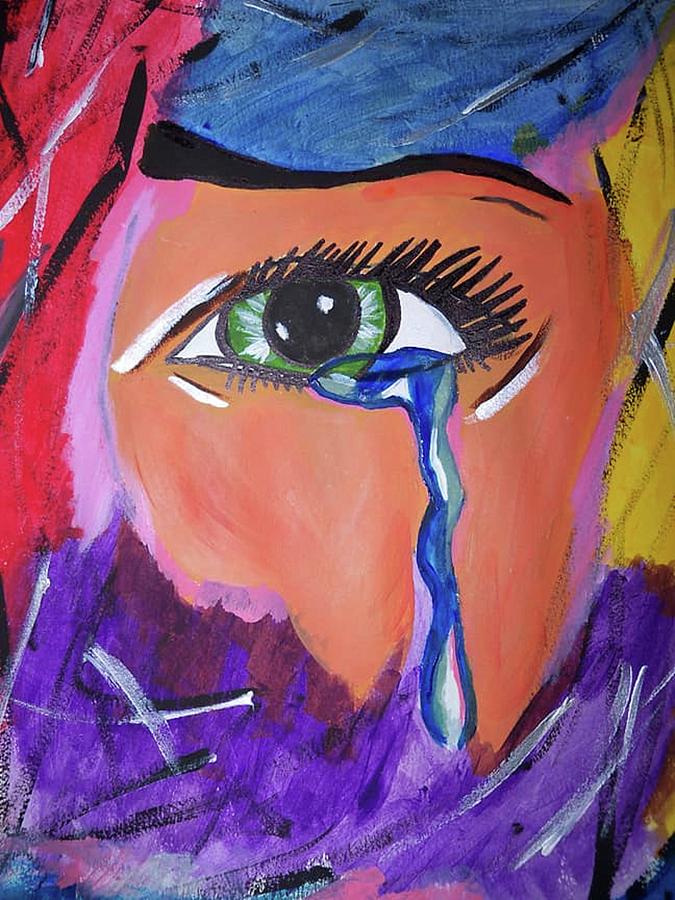
Imagen relacionada
Retrieved from: https://fineartamerica.com/featured/color-of-emotions-michelle-wilcox.html

lunes, 15 de octubre de 2018

Heike Freire-Recommended Conference

Hi, artists!

Today I come here to comment you a very interesting conference I went to. My teacher recommended it to me and I decided to go with a friend and I do not regret it. I took from there a very valuable lesson that I want to share with all of you.

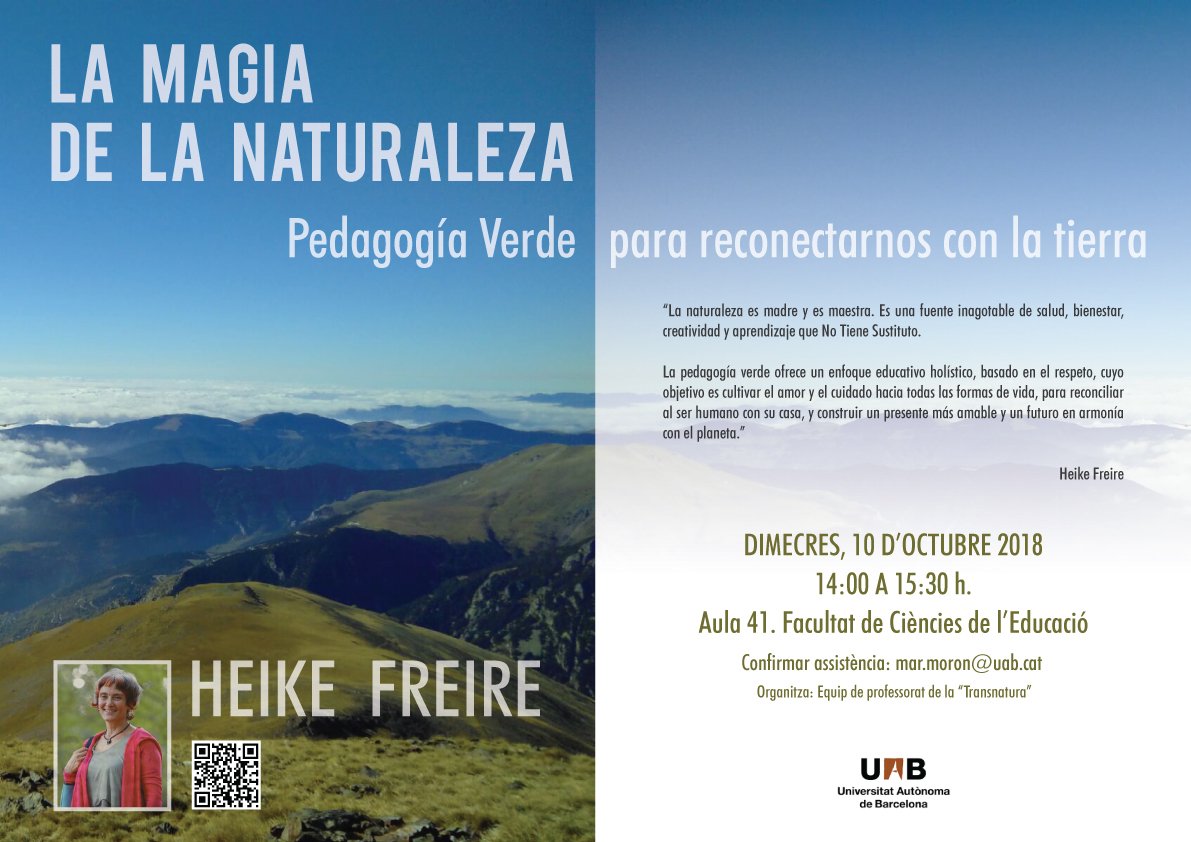
The conference was called La magia de la naturaleza and it was led by Heike Freire, a referent to the "Green Pedagogy" that stands up for the advantages that the relationship between education and nature can bring to the society. Sounds interesting, doesn't it?

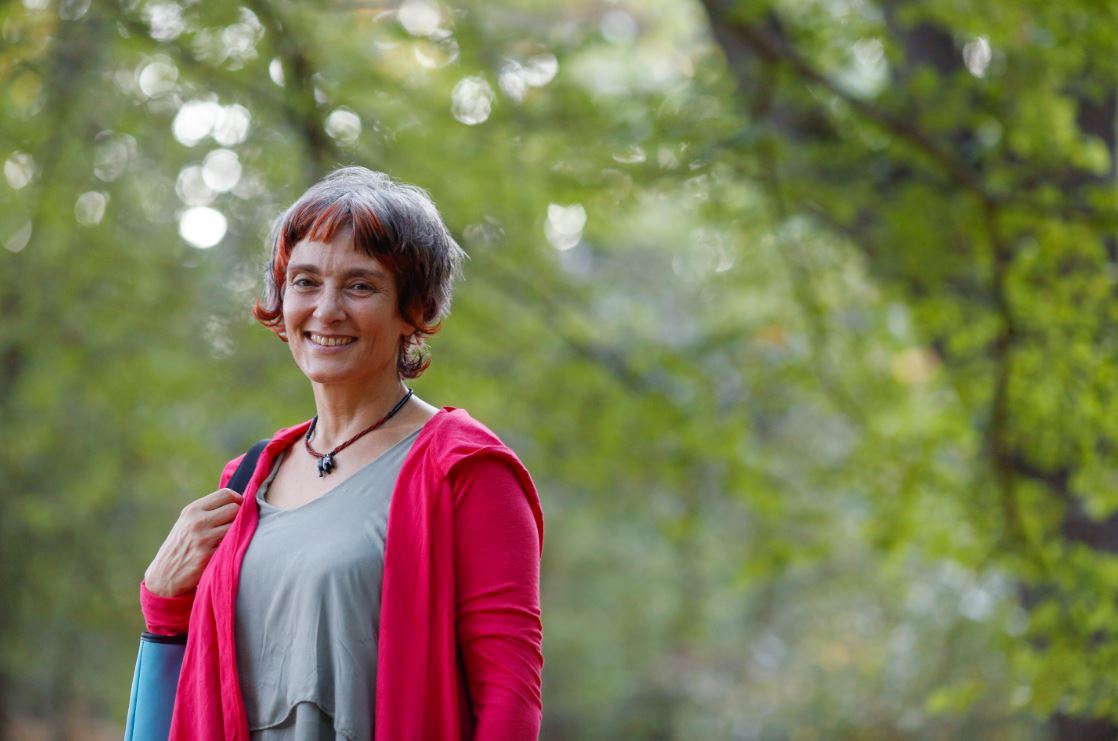
Resultado de imagen de heike freire
Heike Freire
Retrieved from: https://www.elmundo.es/ciencia-y-salud/ciencia/2018/09/28/5bad1b0aca4741c7728b45ed.html

The first aspect that surprised me was the way we started the class: we closed our eyes and had to imagine one of the best moments in our life. Can you do it? Close your eyes, control your breathing (inhale, exhale and throw off all the bad thing in your life). Do it again. What do you see?

In my case, I imagined myself in a beautiful park my family and I went to visit. I live in a place full of nature, but that place really impressed me and I spent time with the ones I loved contemplating the nature. It was a nice day. I wish they were all like that.

The fact is that she told us that most people's best memories are in the nature and that shows where we come from. The memories we have in the nature favour concentration, attention and memory.
She also said something I found really interesting: we, human beings, have an instinct of survival that tells us that we need to have the choice to escape, which the closed classrooms we are used to, do not let us feel.

She says that we are "protecting" in an unhealthy way kids. When do teachers go outside to teach about the nature instead of doing it with pictures in the classroom?

She also mentioned that TDAH is very related to the pollution.

Schools do not allow basic needs like breathing fresh air or for children to be able to move and develop their motor skills.

There was an advertisement of detergents Persil that really expressed how little time children spend outside right now and that impacted everyone. Here I let you the video:


We need nature for our healthy development and because the contact with reality can motivate us. Sometimes what we learn in the classroom does not seem to have any relationship with the real world. Does it?
Deficit of nature can lead us to allergies, to myopia, obesity, problems with attention...

There are two words she mentioned that are very interesting:
-Biophilia (bio=life + philia=love)
-Biophobia (bio=life + phobia=fear)
I think we do not need to mention in which of the two are schools located right now.

Nature lets us develop aspects like friendship, autonomy, community...

In the end, teachers that went there to learn more from the Green Pedagogy asked Freire what steps should they follow to implement more her ideas. She said:
1. Convince the other teachers.
2. Find allies outside the school ("Red Estatal de Educación Física en la Naturaleza", for example).

She explained everything in a very understandable way and she started with the breathing exercise, which helped create a good environment for the rest of the conference.

What did you find more interesting? Do you believe everything she said in the conference? You can comment down below.

Resultado de imagen de la magia de la naturaleza heike freire uab
Retrieved from: https://twitter.com/EducacioUAB/status/1049929146590253056


domingo, 14 de octubre de 2018

Melanie Smith

Hi, artists!

The teacher told us that everybody who wanted, could come to the exposition called: "Melanie Smith: farsa i artifici" and I went there as I was intrigued to know what was the exposition about.

I have to admit that when they put me the video at the beginning I was a little bit confused, but after that, the two guides explained very well that the video recorded by Melanie Smith wanted to explain the confrontation between the Mexican identity (the nation), and the Globalisation represented through the Coca-Cola advertisement.

Then she followed that idea but expressing the cultural shock between her culture (English culture) and the Mexican one through a video in which she is trying to learn how to dance...

Furthermore, she also made a contradiction between the nature of the Amazon jungle and the technology. For example, from rubber we make the cars' wheels... In this way, she tries to explain the tension between nature and humanity.

And another aspect I would like to highlight is that one of the paintings we saw was very similar to "El Jardí de les Delícies" by Bosch. We also saw a giant ear that, of course, has taken its base in Bosch. Here you have some photos:


It was very interesting to go and see how Smith makes us think about which is the place of nationalisms now that we are in a globalised world, specially now that a lot of conflicts are because of this (here in Catalonia there are people who want to become independentist and the Spanish politicans are constantly using the word: "nationalists"...).

It can also make us reflect about human action in the environment.

It can make us think about the changes we are facing and about how ideas are constructed and deconstructed.

It was a really good expositions with very good guides. I just wish we had had more time as there was a lot to see.


Let's use mud!!!!!!

Hi, artists! The other day we were capable of expressing ourseleves by creating something with mud. I wanted to do a bird (the expressi...